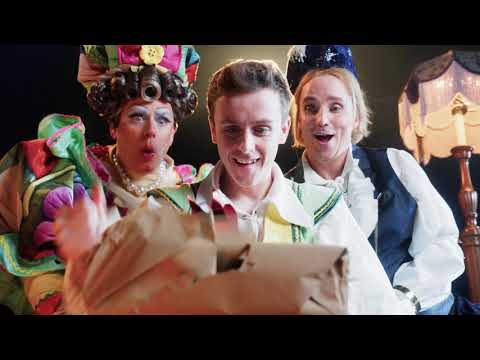
The annual pantomime is a cornerstone of the year at Lighthouse. It’s the one show that is made entirely in-house, especially for our audiences, with Lighthouse Chief Executive Elspeth McBain as lead producer. In a wide ranging interview for The Stage newspaper, she discusses the importance of our pantomime and what it means to Lighthouse and the wider community.
How important is panto season to your venue?
Pantomime is one of the most important moments in our Lighthouse year. It is our opportunity to make something for our audiences in Poole and beyond, that is distinctive, rooted in our town and truly Lighthouse. In partnership with Chris Jarvis, our lead performer, writer and director – along with our production designer James Smith – we have created a show that is unique to Poole and brings our community together at Christmas.
As a presenting venue, we deliver over 350 productions each year and mainly see productions and performances once they are made and on tour. Our pantomime is made in-house which enables all of our team to get involved, input into the process, get to know the whole pantomime company, and feel really connected to the show. We are proud of what we make and deliver, and our team has a sense of ownership which shines out across the whole organisation to our company and to our audiences.
All of the staff, including housekeeping, finance, bar staff and trustees attend the panto welcome breakfast where we meet the full cast and company, and we acknowledge the part each of us plays in making our show successful. It’s always eagerly awaited.
And of course, we get to welcome our community and provide a lively fun introduction to theatre and the art of pantomime for over 20,000 people. We know that they will have the best time with us, which is really important.
Can you give a sense of how it currently contributes to your venue’s bottom line and financial performance?
Financially, pantomime is a crucial part of our income, and its success makes a significant impact on the outturn for our year. As well as ticket sales, it also drives subsidiary income, and we have developed bespoke online pantomime packages for our audiences that have helped to boost this. Since bringing the production in house, the contribution it makes has significantly increased, which has been a lifeline with expenditure budgets so challenging.
Has this changed at all in the last five years post-Covid?
During Covid we continued to deliver a pantomime each year, albeit in 2020 we had to stop due to a further lockdown after only 10 performances. We retained audiences, and attendances for our pantomimes built back quickly after Covid. Since 2023 we have sold more seats for our productions, than we did prior to the pandemic.
How is it being affected by today’s financial pressures? Are any changes being made to cast size, length of run, or any other element of the show to cut costs?
Like many organisations, we have faced rising production costs due to inflationary pressures. We have worked hard to offset these increases by growing our audiences to levels that exceed those achieved before Covid. However, the financial challenges continue to mount year on year, meaning we must find increasingly creative and innovative ways to manage costs, including developing new sponsorship partnerships.
As part of this approach, we cast exceptionally talented, triple-threat performers who bring outstanding skills in singing, dancing and acting. Our production values remain high, and we are committed to ensuring that our pantomimes continue to deliver the quality, spectacle and slightly off-the-wall entertainment our audiences know and love.
How are audiences: is attendance still healthy? Are booking habits changing?
Audience demand is strong and we believe that creating a distinctive and high-quality family show builds loyalty with our customers, as they can expect an experience that they know will be unique to Lighthouse, that they can’t get elsewhere.
In terms of changing booking habits, our audiences are booking later, and we are selling more tickets after a show has opened compared to previous years. Currently sales are on a par with last year, which in this climate is a bit of a relief!
What are the advantages and disadvantages for your venue of producing pantos in-house?
Producing pantomime in-house brings significant advantages for Lighthouse. It allows us to create a production specifically for our audiences in Poole, with a distinctive creative vision and a consistent approach that we can develop year on year. We retain control over the artistic quality, make decisions that work for our venue and budget, and have the freedom to recruit exceptionally talented performers to bring our productions to life.
It also provides valuable development opportunities for our team, who are involved in every aspect of the production, from its creative development and technical delivery to marketing and audience engagement. This offers a very different experience from the touring productions and events that make up much of our programme, helping our staff broaden their skills and gain experience across the production process.
Crucially, our pantomime also enables us to invest in the next generation of creative talent in our region. Our technical trainees gain hands-on experience in a professional theatre environment, while graduates from professional dance training programmes have opportunities to perform in a major production. Some of them have gone on to work in the West End. This is an important part of our mission to make Lighthouse a learning environment and supporting career development by creating routes into the creative industries.
The principal disadvantages are the considerable demands on our team and the financial risks involved. Producing a pantomime requires a huge amount of work across the organisation, placing additional pressure on staff workloads at an already busy time of year. As we cannot afford to increase staffing levels to meet this demand, careful planning and resource management are essential.
Financially, producing in-house also means that Lighthouse carries the full cost and risk of the production, from its initial development through to its final performance. As an independent venue and producer, we do not have the economies of scale available to larger commercial producers, nor can we spread production costs across multiple venues or future productions in the same way that some touring models allow. This makes it essential to balance creative ambition with commercial sustainability.
Ultimately, producing pantomime in-house gives Lighthouse greater creative control, strengthens our connection with local audiences and creates valuable opportunities for emerging talent. It also gives us a good financial return. While the demands on our people and finances are significant, we believe these benefits make it a vital part of our artistic programme and our role within the local creative community.
How important is pantomime to your venue in terms of engaging younger people and/or new audiences?
Pantomime is incredibly important to Lighthouse as a way of engaging younger people, welcoming new audiences and building lasting relationships with our local community. Last year, 25% of our pantomime audience were first-time visitors to Lighthouse, providing a valuable opportunity to introduce new people to the venue and encourage them to return for future performances and experiences.
We are committed to making pantomime accessible to as many people as possible. We offer subsidised tickets to local schools and groups such as Scouts and Brownies, helping young people experience not only the magic of pantomime, but also the excitement of visiting a live performance venue. For some, this may be their first encounter with live theatre, and we want it to be an experience that inspires a lifelong love of the arts.
Our annual Christmas Appeal is another important part of this commitment. Working with our audiences, we raise funds to give disadvantaged families and young people the opportunity to enjoy pantomime and live theatre for free, removing financial barriers and ensuring that more people can share in the experience.
This year, we are particularly delighted that the wonderful Miriam Margolyes has recorded the voice of the giant Blunderbore in our production of Jack and the Beanstalk. Miriam has generously donated her fee to our Christmas Appeal, helping us reach even more young people who might otherwise miss out on the magic of live theatre.
For us, pantomime is about much more than a Christmas show. It is a powerful way to welcome new audiences through our doors, make theatre accessible to everyone and create memorable experiences that can inspire the next generation of theatregoers. And we love it! Oh yes we do!
:: Jack and the Beanstalk runs from Thursday 10 December until Sunday 3 January. Tickets available now at https://www.lighthousepoole.co.uk/ or on 01202 280000.