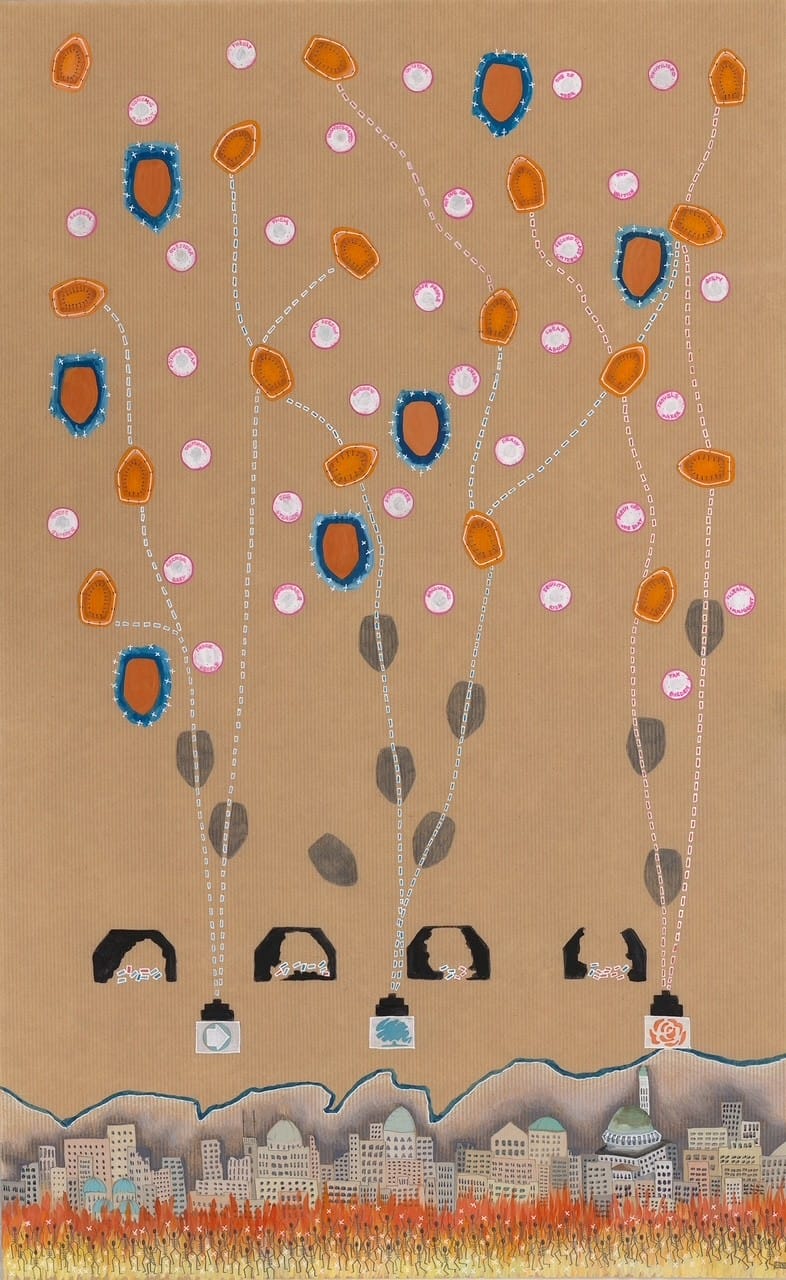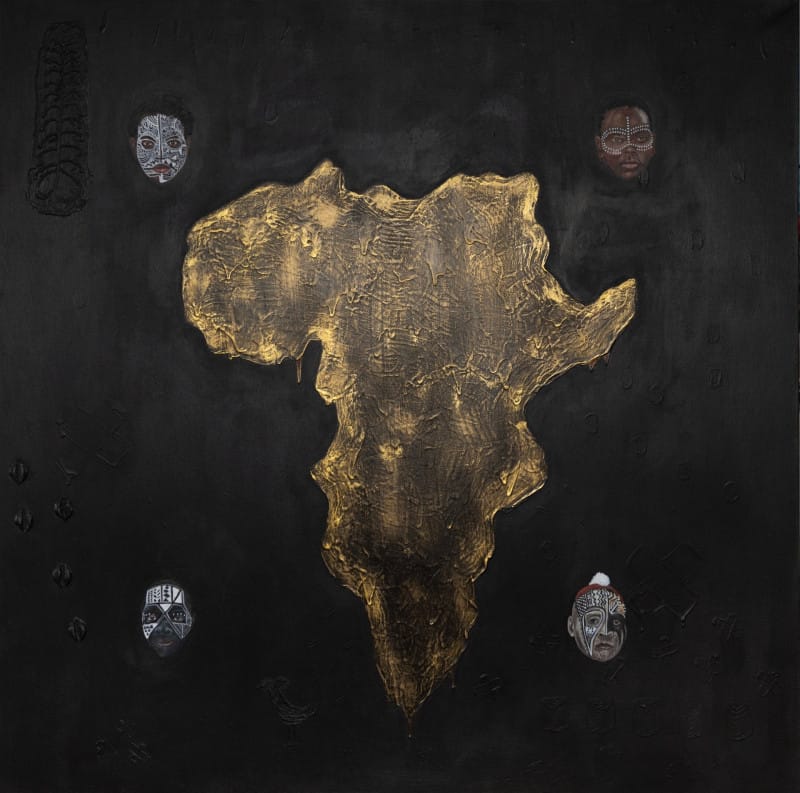
A deeply personal, but universally relevant story, The Past Is Present finds Swanage-based artist Sharon James continuing her exploration of the ways the past continues to shape the present in terms of Black British history, heritage, and identity.
The exhibition at Lighthouse Poole from Tuesday 6 to Saturday 31 October, is the project’s second show and brings together the artist’s ever-evolving Blackground works with nine new pieces, a film essay and a book of 50 images and the stories that lead to their creation. A collaboration with Development Education in Dorset (DEED), it encompasses visual art, film, writing and textiles with the intention of opening up a broader conversation about history, memory, and identity.
“Dorset continues to rank really low on representation, so this is my fourth year of putting something on in Dorset during Black History Month – and the second year at Lighthouse after we did We Rise last year,” says Sharon.
“It’s a body of about 52 drawings and they’re kind of autobiographical, but they’re also drawing parallels between things that are going on now, and things that have happened historically. So, for instance, in a piece called Shame on Both Sides I talk about my family heritage – on my dad’s side slaves, but on my mum’s slave owners – her grandfather was Queen’s Counsel in St Kitt’s, and his house had a slave cellar.
“Another piece is called Between a Rock and a Hard Place and talks about people coming over on boats and fleeing terrible situations. It features sticks of seaside rock using the words with negative associations that are applied to them. I grew up in a National Front and BNP stronghold in north London; there were race riots when I was growing up in the 1980s and then again more recently following the murder of the young girls in Southport.”
The roots of Blackground lie in a work that Sharon made to represent the cultural heritage of her half-Nigerian children.
“When my son was born, I thought it’s really important that he knows he’s half-Nigerian and then I realised it’s also really important that I know where I’m from properly because my parents and my grandparents wouldn’t talk about, so this all came through research.
“Back then I was after making something beautiful around this and I really didn’t want to sell it, but this one guy really liked it and kept asking and eventually I sold it to him – I was strapped. That was when I decided that if I was going to do this I should do it in more depth, so now there are specifically African Adinkra symbols in the work, and Igbo symbols that relate to the children’s Nigerian heritage.”
The exhibition looks at histories that have been deliberately overlooked or softened, particularly Britain’s connections to slavery and colonialism, and asks audiences to consider what we carry forward from those histories.
“Some people say that’s all in the past, but it’s constantly coming up in the present. It’s our heritage, that’s why the show is called The Past and the Present. I think I’ll always be making work in this vein, so this exhibition is not a full stop, it’s a comma. Blackground will be on-going.
“As a black person, when you walk down a street full of St George’s flags, we all sigh and we lower our shoulders; we all do it. I’ve talked about it to enough black people to know we have a real collective unease about it. It all relates back to things that have happened, like colonialism, and I don’t think people realise how joined up it actually is.”
Working with DEED, Sharon is planning events around the exhibition including inviting aspirational speakers from Dorset’s Global Majority community and reaching out to local schools to bring groups.
“I’m hoping it’ll be educational, I want people to understand things that they may not fully understand. I’ve learnt so much from researching and then making this work – I thought I knew stuff when I started, but I realised how little I actually knew.
“Making the book has consolidated that in a way that I think makes the work more accessible outside of a gallery by removing that exclusivity thing that goes with galleries. The text doesn’t directly explain each picture; it tells a story about the things that might have inspired me to make the pictures.
“Like the show itself, it’s very personal, but hopefully also universal.”
(NC)